Evangelical persecution narrative
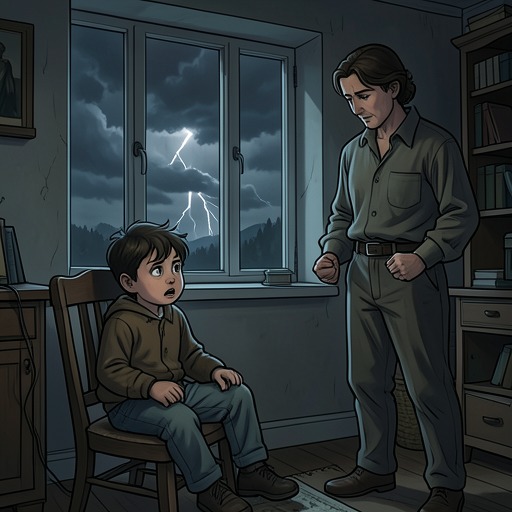
Hillbilly ElegyThe Evangelical persecution narrative enters J.D. Vance’s childhood as more than a set of political claims: it teaches him to see the wider world as hostile to Christianity and himself as a member of a besieged minority. Through his father’s church, ordinary disagreements about science, music, and belief become signs of a conflict between true Christians and a corrupting outside. The narrative gives a young convert a clear sense of belonging, but also makes suspicion a habit and helps prepare the way for his later rejection of the faith.
Faith beyond the persecution narrative
Before this framework took hold, Mamaw’s Christianity offered a different model of religious life. She rarely attended church and distrusted organized religion, whose leaders she associated with hypocrisy and exploitation. Yet her faith was intimate and durable: she donated part of her spare income to churches in Jackson, Kentucky, and understood God as present in the family’s ordinary dangers and disappointments. After a frightening wrong-way turn onto an interstate exit ramp, she treated their safe return as evidence that Jesus accompanied her.
Mamaw’s religious instruction centered less on identifying enemies than on conduct. She believed J.D. Vance should work rather than waste his abilities, care for his family, forgive, and resist despair. This practical, personal faith did not depend on conspicuous piety or constant church attendance. Its contrast with the later church culture is important: in Mamaw’s account, belief was a source of obligation and reassurance; in the persecution narrative, religious identity increasingly depended on recognizing threats and drawing boundaries.
How the besieged identity formed
The conversion was bound up with J.D. Vance’s renewed relationship with his father and the church that mattered to him. He embraced young-earth creationism, read about millennial prophecy, debated scientists online over evolution, and came to believe the world would end in 2007. He even discarded his Black Sabbath CDs. These commitments made faith feel active and consequential, while the church’s distrust of secular science and secular music supplied a ready-made map of what a Christian should resist.
The map extended into daily choices. At his father’s house, listening to Eric Clapton was discouraged because the guitarist was said to be influenced by demonic forces. A church member treated the claim that playing Led Zeppelin’s Stairway to Heaven backward revealed an evil incantation as fact. At first, J.D. Vance regarded such restrictions as rules he could follow or evade. As he immersed himself further in evangelical theology, however, he began to regard evolution and the Big Bang not as explanations to examine but as ideologies to oppose. Religious division also reached into his family: his admiration for Uncle Dan was unsettled by Dan’s Catholic acceptance of evolutionary theory, and Mamaw fell under suspicion because her religious views coexisted with her fondness for Bill Clinton.
Persecution as a way of reading the world
As a young teenager, J.D. Vance heard that Christians were losing ground in public life. The alleged War on Christmas was represented through lawsuits against small-town nativity displays; David Limbaugh’s book Persecution described discrimination against Christians; and reports about New York art exhibits featuring defaced images of Christ or the Virgin Mary reinforced the sense of insult. The claims turned a collection of political controversies and cultural disputes into a single story: secular elites were hostile to Christianity, and even other Christians could be too accommodating to count as allies.
That story made the world feel foreign and threatening. Conservative Protestant debate about gay rights also shaped his understanding, and as a young child he mistakenly feared that his dislike of girls meant he was gay and condemned. Mamaw answered his fear by reassuring him that God would still love him. Later, after entering his father’s church, J.D. Vance reinterpreted that exchange as secularist thinking rather than Christian love. The reversal shows how thoroughly the new framework could reorganize an earlier memory: compassion that had once settled a child’s fear was recast as evidence of misplaced priorities.
Moral boundaries and the End Times
The church’s moral emphasis, as J.D. Vance remembers it, focused heavily on what Christians should oppose: the gay agenda, evolutionary theory, Clintonian liberalism, and extramarital sex. He recalls comparatively little affirmative instruction beyond fidelity in marriage and preaching the gospel. He planned to marry monogamously and tried to convert others, including a Muslim seventh-grade science teacher. The faith thus offered him clear tests of membership, while the habits and virtues those boundaries were meant to protect received less attention in his account.
Apocalyptic expectation intensified the sense of siege. Sermons and the Left Behind books presented moral decline as movement toward the End Times; people speculated about whether the Antichrist was already alive and which world leader he might be. The prospect of the Rapture made cultural conflict seem not merely political but prophetic: a world sliding toward corruption appeared to be approaching its foretold conclusion. For a boy seeking certainty, this gave scattered disputes a dramatic destination.
Material support and the cost of suspicion
The narrative’s emphasis on persecution sits beside evidence that religious institutions could offer concrete assistance. In regions affected by manufacturing decline, joblessness, addiction, and broken homes, churches could provide alcoholics with community, offer expectant mothers a home along with job training and parenting classes, connect people to employment, and help families in financial trouble. When J.D. Vance’s father faced such trouble, members of his church pooled their efforts to buy the family a used car. These acts locate religion not only in doctrinal conflict but in practical networks of care.
J.D. Vance also recalls attending Narcotics Anonymous meetings with his mother, where people gathered in a circle to speak about addiction and the possibility of recovery. Those meetings were distinct from church life, but they place his religious formation within a wider landscape of people seeking support amid addiction and instability. His account further notes that reported church attendance in the South and Midwest exceeded actual attendance, and that the Cincinnati and Dayton regions of Ohio had rates as low as San Francisco’s. Cultural pressure to appear religious could therefore coexist with weak participation and real needs for community assistance.
In retrospect, J.D. Vance recognizes that the religious views formed during his early years with his father were helping sow the seeds of his eventual rejection of Christianity. The persecution narrative had made faith vivid and communal, but it also trained him to classify disagreements as evidence of hostility or heresy. Its central irony is that a belief system promising protection and moral clarity could narrow the circle of trust, even while the churches around it sometimes supplied the practical help that vulnerable families needed.